
New Delhi | 2025 — As India experienced record-breaking temperatures at the onset of 2025, ADRA India implemented a proactive Anticipatory Heatwave Response Plan to reduce the health and livelihood impacts of extreme heat across Delhi-NCR, Gujarat, Maharashtra, and Madhya Pradesh. Implemented in close collaboration with the National Disaster Management Authority (NDMA) and local District Disaster Management Authorities (DDMAs), the initiative marked a significant shift toward anticipatory action, prioritising early intervention before heat-related emergencies escalated.
The urgency of this response was underscored by the severity of recent heat impacts. In 2024 alone, India recorded 459 heat-related deaths and thousands of heatstroke cases, with early 2025 forecasts warning of even more prolonged and intense heatwave conditions. Extreme heat emerged not only as an environmental challenge but as a growing public health and livelihood crisis, disproportionately affecting outdoor workers, informal labourers, children, older persons, and communities with limited access to water and shade.
At the national level, the heatwave response aligned closely with the Government of India’s broader disaster risk reduction priorities and was implemented in coordination with NDMA’s early warning and preparedness frameworks. A major focus of this collaboration was ADRA India’s engagement with the Delhi Heat-Action Plan, strengthening localised preparedness, coordination, and response mechanisms in one of the country’s most heat-vulnerable urban regions.
Key Components of the Anticipatory Heatwave Response
Cooling Centres:
Community-based Cooling Centres were established to provide shaded rest spaces, safe drinking water, hydration support, and immediate relief for vulnerable populations, including outdoor workers, children, the elderly, and pregnant women. These centres functioned as first-response protection points during peak heat periods.
Community Engagement and Preparedness:
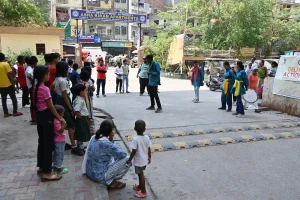
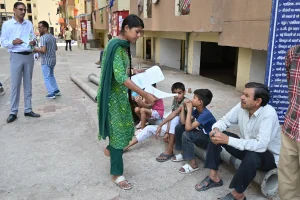
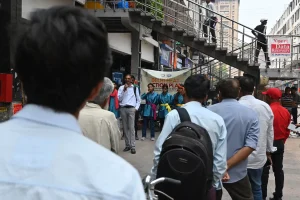
Trained Aapda Mitra volunteers and frontline workers led intensive community outreach efforts, including awareness drives on heat-risk prevention, distribution of safety and hydration materials, and support for the early identification and referral of heat-related illnesses. Street-based and school-based activities played a critical role in extending reach to both working populations and children.
Geographic Focus Areas:
- Delhi-NCR: Addressing the urban heat island effect, dense built environments, and high exposure of gig and informal workers.
- Gujarat: Responding to extreme temperatures and arid conditions in the Saurashtra and Kutch regions.
- Maharashtra: Managing combined heat–humidity stress in the Vidarbha and Marathwada belts.
- Madhya Pradesh: Tackling frequent 45°C+ temperatures, compounded by limited access to reliable water sources.
The overall strategy drew on global best practices and anticipatory action models implemented in climate-vulnerable contexts such as Nepal and Bangladesh, adapting these approaches to India’s diverse urban and semi-arid settings. Emphasis was placed on early warnings, rapid pre-positioning of resources, and strengthening community readiness ahead of peak heat periods.
Reach and Impact at Project Completion
By the conclusion of the intervention period, the anticipatory heatwave response achieved significant reach across targeted communities. A total of 22 Cooling Centres were operationalised, providing immediate relief and protective spaces during peak heat. To support hydration and prevent heat-related illnesses, 3,750 Oral Rehydration Solution (ORS) sachets were distributed among high-risk groups.
153 frontline workers were trained on heat-risk identification, first response, and early action protocols. Over 5,000 Information, Education, and Communication (IEC) materials were circulated, supported by 80 street theatre performances that enabled localized, culturally relevant heat-safety messaging.
The initiative also placed strong emphasis on youth and school engagement. More than 5,100 students across 18 schools were sensitized on heat preparedness, while 4,800+ community members were directly engaged through outreach sessions and public demonstrations. Additionally, 1,000+ trees were planted to enhance natural shade and support long-term heat mitigation at the community level.
Alongside these targeted interventions, heatwave preparedness was systematically embedded into all ongoing projects, ensuring that anticipatory action was mainstreamed across sectors rather than treated as a standalone response.
Extreme heat placed enormous pressure on local health systems, heightened the risk of dehydration, heat exhaustion, and heatstroke, and directly disrupted livelihoods, particularly for daily-wage and outdoor workers. By prioritizing anticipatory action, the initiative contributed to reducing avoidable deaths, protecting incomes, and easing the burden on public services during peak heat periods. As climate change continues to intensify heat-related risks across India, this anticipatory heatwave response stands as an important example of how early, coordinated, and community-centred action can mitigate the worst impacts of extreme heat. Through strong institutional collaboration, early warning–driven interventions, and sustained community engagement, ADRA India and its partners have advanced a preventive, people-first approach to climate adaptation and heat-risk management.